ATOMFALL interactive map: Find Loot and Explore Areas
Use the ATOMFALL interactive map to locate collectibles, dig spots, and supplies. Learn how MapGenie and mapmaster.io filters help plan your exploration.
Jump to
Where to Find an ATOMFALL interactive map
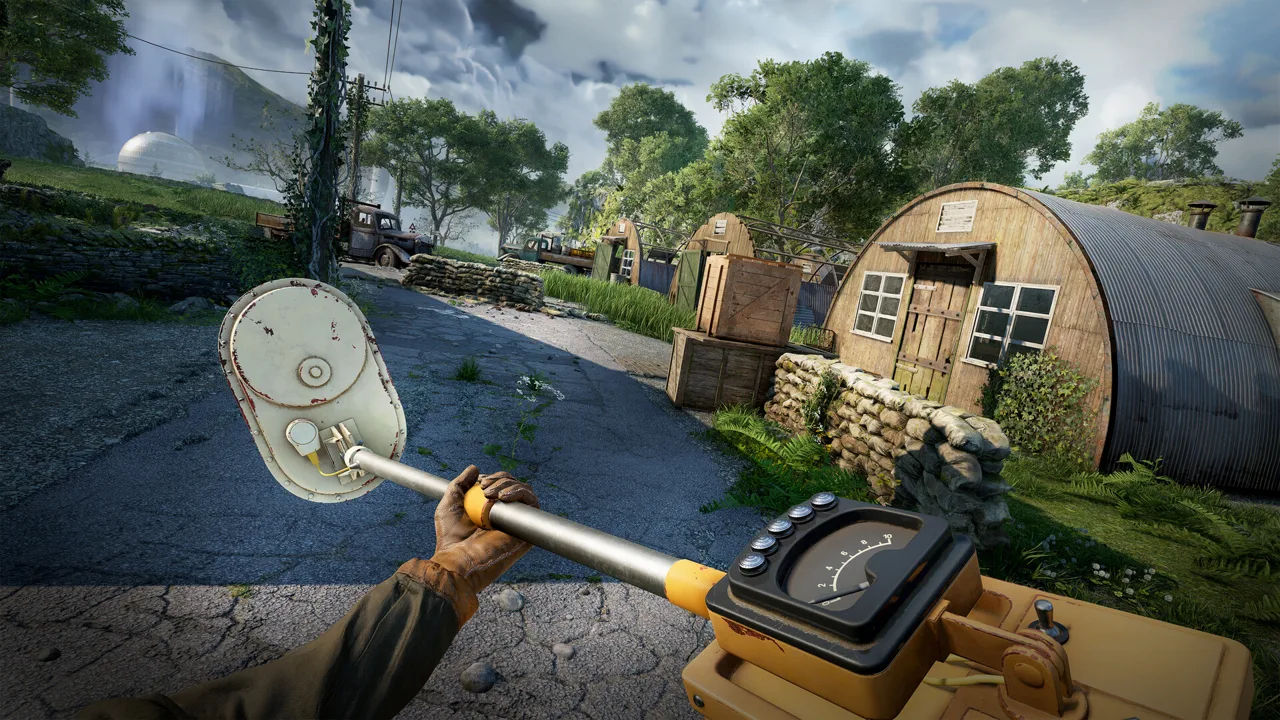
A promising scavenging trip can turn into aimless wandering when you lose track of what you came to find. An ATOMFALL interactive map helps you locate collectibles, supplies, and landmarks while keeping your exploration focused. With an ATOMFALL interactive map open alongside the game, you can narrow the displayed markers to the things you actually want to investigate.
Two options appear in the supplied sources: MapGenie and mapmaster.io. MapGenie’s Atomfall index lists a Northern England map and several collectible guides. A player video also demonstrates both websites, including their area selectors, category filters, and zoom controls.
These are third-party map resources. For the game’s official description, see Atomfall’s Steam listing from Rebellion, which explains its emphasis on scavenging, crafting, bartering, and investigating a fictional British quarantine zone.
| Map resource | What the supplied material shows | Source of the information |
|---|---|---|
| MapGenie | Northern England map, collectible guides, and a 100% Checklist | MapGenie’s Atomfall index |
| MapGenie map interface | Area selection, marker filters, and zoom controls | Player experience in the supplied video |
| mapmaster.io | Atomfall maps and guides, area switching, category filters, and zoom controls | Player experience in the supplied video |
The references establish that these tools offer ways to explore mapped information. They do not establish that either service contains every current location or covers every expansion. Before relying on a map for a particular area, check what that website actually lists.
How to Use the MapGenie Atomfall Map
Start with MapGenie’s Atomfall maps and collectible guides. Its index links to Northern England and includes guides for Landmarks, Locations, Leads, Findings, Dig Spots, Comics, Lunchboxes, Recipes, Visitor Pamphlets, Training Stimulants, Atomic Batteries, Manuals, and Weapons.
 Image: YouTube / Rebellion
That list gives you a useful starting point: decide what you are looking for before opening a crowded map.
Player experience: The supplied video demonstrates opening Atomfall through MapGenie’s game search, selecting its map, and using the left-side controls to change areas and toggle markers. It also shows that an entire collectible group or an individual type, such as Lunchboxes, can be toggled.
| Step | Action demonstrated in the player video | Purpose |
|---|---|---|
| Open Atomfall | Search for the game on MapGenie and select its entry | Reach the game’s maps and guides |
| Open the map | Select the Atomfall map | View the mapped locations |
| Select an area | Use the area controls on the left | Focus on the area you want to inspect |
| Adjust filters | Toggle groups or individual marker types | Control which markers appear |
| Adjust zoom | Use the displayed zoom controls | Inspect the map at a useful scale |
A good approach is to hide categories unrelated to your current objective. If you are looking for Lunchboxes, leave that category visible while hiding other collectibles. This follows directly from the filtering demonstrated in the video and makes the display easier to read.
The ATOMFALL interactive map can also support a broader scavenging plan. For example, you could inspect Weapons and Recipes separately, then compare their displayed locations with the area you intend to explore. Keep each search focused enough that you can distinguish the relevant markers.
MapGenie’s index includes a 100% Checklist, but the supplied material does not explain its tracking controls, account requirements, or limits. Treat the listing as a resource to inspect rather than assuming a particular progress-saving feature is available.
How to Navigate mapmaster.io
The second website demonstrated is mapmaster.io’s game map directory. Its Atomfall interface appears in the player video, which shows maps and guides along with controls for selecting areas and displaying different marker categories.
 Image: YouTube / Rebellion
Player experience: The video demonstrates searching for Atomfall, opening a map, switching maps through a selector near the upper-left corner, and toggling categories that include investigations, locations, and items. It also shows individual item filters.
The same player demonstration shows two ways to zoom: the mouse wheel and the on-screen plus/minus controls near the lower-right corner. Those instructions come from the recorded interface; the placement of controls may differ if the website changes.
A good approach is to use a similar filter setup when comparing the two services. Select the corresponding area, then display the same kind of location or collectible where available. That gives you a clearer comparison than viewing one map with every marker enabled and another with only items visible.
Avoid treating different category names as automatic equivalents. MapGenie lists Leads and Findings, while the video describes investigations on mapmaster.io. The references do not explain how those categories correspond.
The video also mentions Interchange while navigating mapmaster.io, but its narration does not provide reliable progression instructions. Use the demonstration for website navigation; it is not enough to establish where every playthrough begins or how an area becomes accessible.
For your ATOMFALL interactive map setup, the practical question is whether you can locate the relevant area and filter the information you need. The supplied sources do not support ranking one service above the other for accuracy or completeness.
Choose Filters That Match Your Objective
A map becomes more useful when its visible information matches a specific question. “Where should I look for a Lunchbox?” is easier to act on than “What does this entire region contain?”
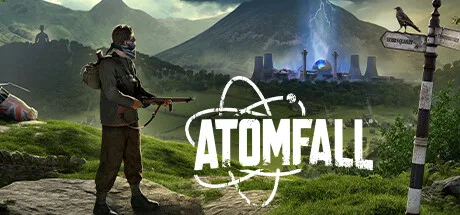 Image: Steam / Rebellion
MapGenie’s index provides a concrete set of categories to explore. The following table groups those listed categories into possible search goals. These are editorial suggestions for organizing a map session, not claims about item effects or progression requirements.
| Your search goal | Categories listed by MapGenie | Suggested approach |
|---|---|---|
| Find reference points | Landmarks, Locations | Compare the displayed locations with the area you are exploring |
| Follow an investigation | Leads, Findings | Show the relevant category when looking for information |
| Look for buried discoveries | Dig Spots | Pair map inspection with the game’s metal-detector exploration |
| Search for collectibles | Comics, Lunchboxes, Visitor Pamphlets | Display one collectible type at a time |
| Locate listed items | Recipes, Training Stimulants, Atomic Batteries, Manuals, Weapons | Select the item category relevant to your search |
Collectibles: Keep the Search Specific
Comics, Lunchboxes, and Visitor Pamphlets all appear in MapGenie’s guide index. If you want to search for one of them, a good approach is to show that category by itself before deciding where to explore.
This keeps unrelated icons from competing for your attention. It also helps you return to a clear question after a detour: you are looking for a particular collectible type, rather than trying to interpret every marker at once.
The ATOMFALL interactive map references do not provide collectible totals or verified coordinates. Check the map itself for location information instead of relying on an unsupported completion count.
Dig Spots: Connect the Map With Exploration
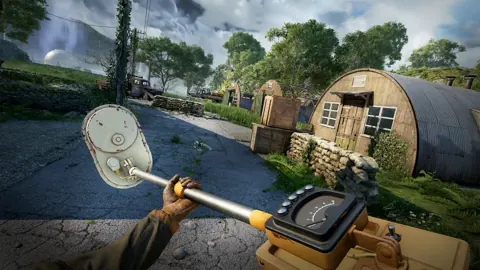
Rebellion’s official game description explains that a metal detector can uncover hidden treasures. MapGenie separately lists Dig Spots among its Atomfall guides.
A good approach is to inspect that category when you want to plan metal-detector exploration. Once you are in the game, keep paying attention to its own cues and the surrounding environment.
A marker provides a location reference; the supplied sources do not explain the exact procedure for reaching or completing every dig spot. They also do not establish that each spot has the same contents.
Items and Investigations: Avoid Assuming Effects
Recipes, Manuals, Training Stimulants, Atomic Batteries, and Weapons are listed categories. Their presence on an index does not establish what every item does, where it is required, or whether you need it for a particular objective.
Similarly, Leads and Findings fit Atomfall’s investigative premise, but the references do not provide a complete sequence for solving its mysteries.
A good approach is to select these filters in response to something you are already investigating. That keeps the map connected to your current questions without turning an unexplained marker into an assumed requirement.
Build a Focused Exploration Routine
Atomfall’s official description emphasizes scarce weapons and ammunition, scavenging, and encounters across villages, caves, ruins, and bunkers. A useful map routine should support those activities while leaving room to observe the game world.
Start with one objective and one area. Then use the available filters to inspect relevant markers. You can broaden the search later if your original question remains unanswered.
| Exploration stage | Suggested map action | What to consider |
|---|---|---|
| Before setting out | Select the relevant area and marker category | What are you trying to find? |
| While comparing locations | Zoom between nearby markers and the surrounding map | Which locations fit your intended direction? |
| During a detour | Revisit the area and filter selection | Has your search goal changed? |
| After finding something | Keep a separate note if needed | What have you personally confirmed? |
| Before exploring another area | Check its available map coverage | Does the resource show the information you need? |
These are planning suggestions, not a verified walkthrough. The references do not establish safe routes, travel times, access conditions, or enemy behavior for particular markers.
Use the Map Without Revealing Every Discovery
An ATOMFALL interactive map can expose locations you have not discovered through play. If you want to preserve the investigative experience, a good approach is to keep Leads, Findings, or investigation markers hidden until you need help.
You can still use a narrower category, such as Lunchboxes or Locations, for a specific search. The filtering shown in the player video makes that selective use possible.
Treat a Marker as a Starting Point
Rebellion describes exploration across caves, bunkers, and other varied environments. A map icon alone cannot explain the full approach to every destination.
If a location is unclear, compare the selected area with what you see in the game. Avoid assuming that proximity on the map guarantees a direct or safe route.
Keep Your Own Confirmed Notes
The supplied material does not explain automatic synchronization with your game or guarantee saved map progress. A good approach is to keep a brief personal list of discoveries if you need to track them across sessions.
Record only what you have confirmed. That way, your ATOMFALL interactive map remains a useful reference alongside your own observations, and an unvisited marker stays an unverified destination.
FAQ
Where can I find an ATOMFALL interactive map?
MapGenie has an Atomfall index linking to its Northern England map and collectible guides. The supplied player video also demonstrates Atomfall maps on mapmaster.io. Both are third-party resources.
Can I hide everything except Lunchboxes?
Player experience: Yes, the supplied video demonstrates toggling individual collectible types on MapGenie, including Lunchboxes. A good approach is to hide unrelated categories, then leave Lunchboxes displayed for that search.
Does an interactive map automatically track my game progress?
The supplied references do not establish automatic game synchronization. MapGenie lists a 100% Checklist, but its saving behavior and account requirements are not explained in the material.
Do these maps cover Wicked Isle and The Red Strain?
The Steam listing includes both expansions, but the supplied map index and player video do not confirm their map coverage. Check each service’s area selector and available maps before relying on it for expansion exploration.
Continue with
 ATOMFALL metal detector: Locations and How to Use ItFind the ATOMFALL metal detector for free or trade with Molly Jowett, then learn how to read its lights, track buried caches, and dig up useful supplies.
More in Guide
ATOMFALL a familiar stranger: Lead and Rewards Guide
Follow ATOMFALL a familiar stranger from the village tent to the final rifle cache, with note locations, weapon details, and tips for tracing each clue.
ATOMFALL achievement guide: All 36 Base-Game Unlocks
Use ATOMFALL achievement guide to plan all 36 base-game unlocks, manage ending saves, tackle combat challenges, and prepare for a run under five hours.
ATOMFALL atomic battery: Locations and Power-Up Guide
Find ATOMFALL atomic battery locations, trader options, and robot extraction steps. Plan your route and restore power to the Interchange with this guide.
ATOMFALL beginner tips: 12 Ways to Survive the Zone
Use these ATOMFALL beginner tips to find tools, manage inventory, conserve ammo, barter wisely, and follow leads as you explore the deadly quarantine zone.
Join the community
Official channels for news, updates and player help: